


Matosinhos joins the fishing community of Angeiras in the fight against marine litter
According to recent data, over 150 million tonnes of plastic pollute the world's oceans. If the trend continues, by 2025 there will be one tonne of plastic for every three tonnes of fish, and by 2050 the amount of plastic will exceed the quantity of fish in the oceans. "It's a global problem," warned Sandra Ramos, a researcher at the Interdisciplinary Centre for Marine and Environmental Research (CIIMAR).
To combat this serious problem, Matosinhos City Council, Matosinhos Environmental Monitoring and Interpretation Centre (CMIA), and CIIMAR have joined forces around the prevention of marine litter, a project that directly involves the fishing community of Angeiras.
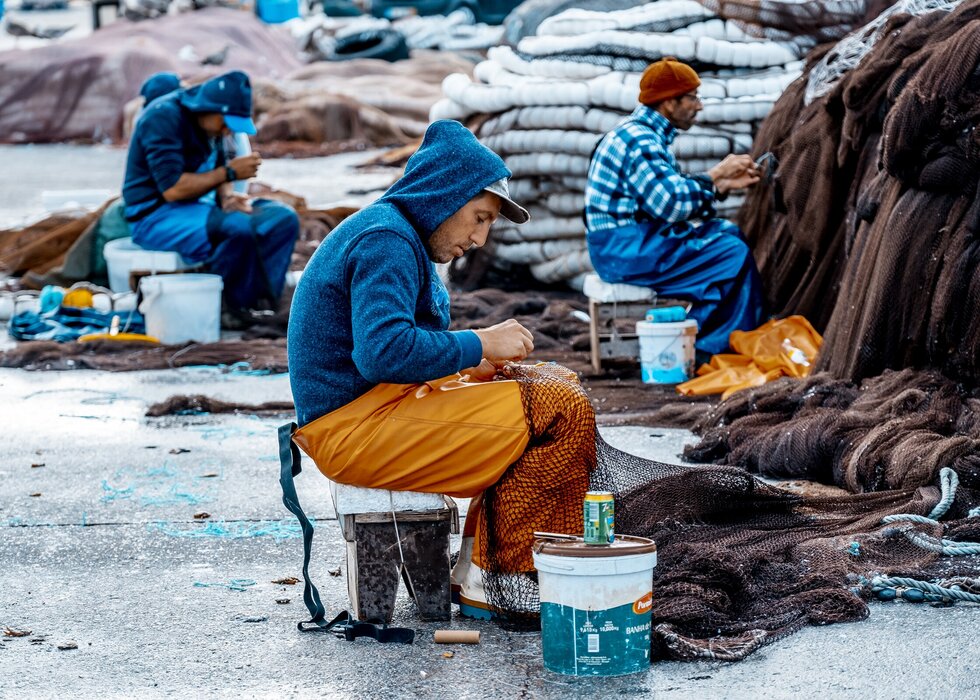
Fishermen, being the first to suffer the impact of marine pollution, have a crucial role in this fight. Ocean litter, in addition to destroying marine fauna, damages fishing nets and poses an additional challenge in separating litter from the catch. It is estimated that marine litter has an economic impact of €61.7 million on the European fishing fleet.
The topic was discussed at a meeting held at the headquarters of the Angeiras Fishing Vessel Owners' Mutual Association (AMAPA), moderated by Sandra Ramos and described by Councillor for the Environment and Energy Transition, Manuela Álvares, as "a salty conversation". Also present were the president of the union of the parishes of Perafita, Lavra and Santa Cruz do Bispo, Lurdes Queirós, and the president of AMAPA, Fernando Correia.
The researcher stressed that 80% of marine litter comes from land, while the remaining 20% originates at sea, largely resulting from fishing activities. On board the vessels, in addition to the waste produced by the activity, domestic waste such as food scraps, cigarette ends, plastic bottles, glass packaging or cans is often discarded. "The ocean is the planet's largest rubbish dump, and most of it, about 70%, is at the bottom of the sea," explained Sandra Ramos.
During the session, the consequences of marine litter, including the threat of microplastics, were discussed, and some European projects under discussion were presented. Contributions to solve the problem were also gathered, such as the need for specific containers for waste on board and on land, as well as more frequent cleaning of beaches.
This action is part of a broader project, which will unfold in several phases, including the holding of round tables on the topic, beach clean-ups, and the drafting of a document with contributions from the Angeiras fishing community, which will be delivered to the competent authorities.